A Simple Trick to Reduce Vibration on Bambu H2D and H2S Printers
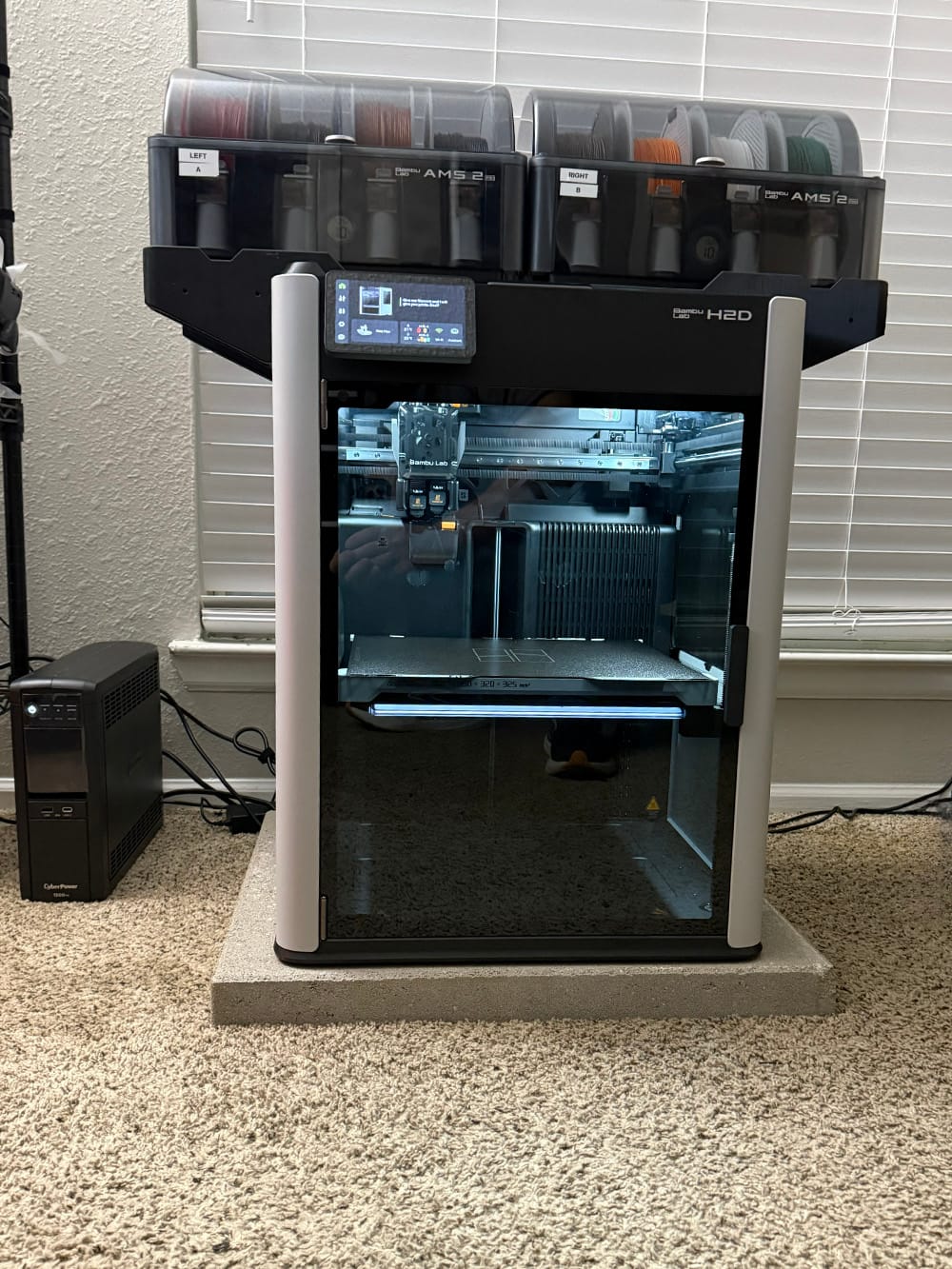
High-speed printers like the Bambu Lab H2D are incredibly fast, but that speed can also mean a lot of movement and vibration during printing. When the printer is running aggressive travel moves, the entire machine can sometimes transfer that energy into the table or bench it’s sitting on.
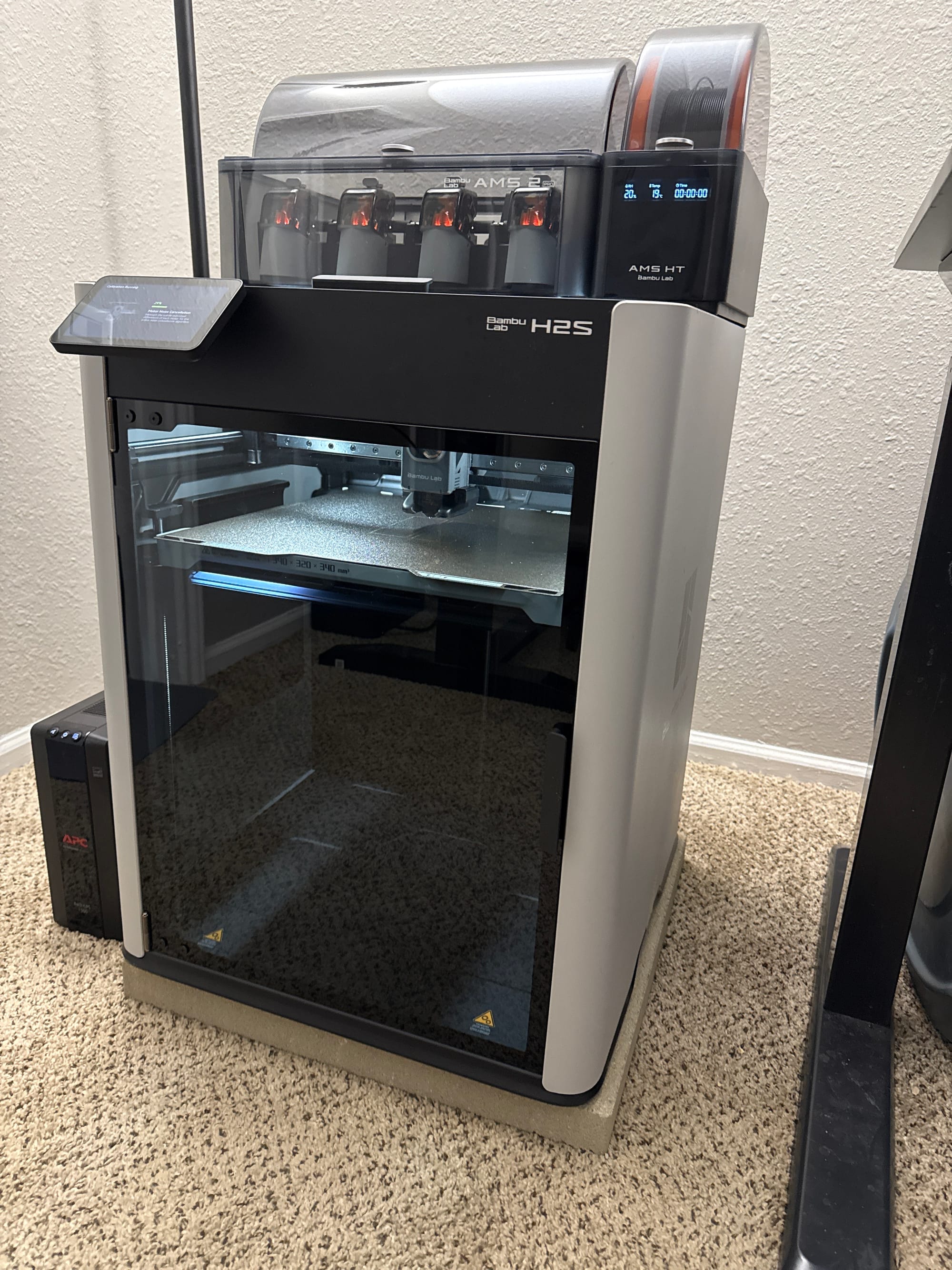
In my workshop at Bianco Labs, the printer sits on a solid concrete slab foundation beneath the carpeting. On top of that carpet and cushion layer, I added a concrete paver to give the printer a heavier and more stable base. The added mass from the paver helps absorb some of the vibration that high-speed printers naturally produce.
The printer itself sits directly on that paver, which acts as a stable platform between the machine and the softer surface of the carpet and pad. This simple setup has helped reduce how much vibration transfers into the surrounding workspace.
Another thing that may help stability is the extra weight on top of the printer. My H2S is running an AMS Pro and an AMS HT mounted side-by-side above the machine, and my H2D also runs dual AMS units on a top bracket. While they’re mainly there for multi-material printing and filament drying, the additional mass on top of the printer may also help keep it more stable during high-speed movements.
Every workshop setup is different, but adding mass beneath a high-speed printer can make a noticeable difference in stability. In my case, a simple concrete paver turned out to be an easy and inexpensive way to improve the overall feel of the machine during printing.
Sometimes small workshop adjustments like this can make a big difference in how a printer behaves.