How I Printed a Large Outdoor Birdhouse Using Four Bambu Printers

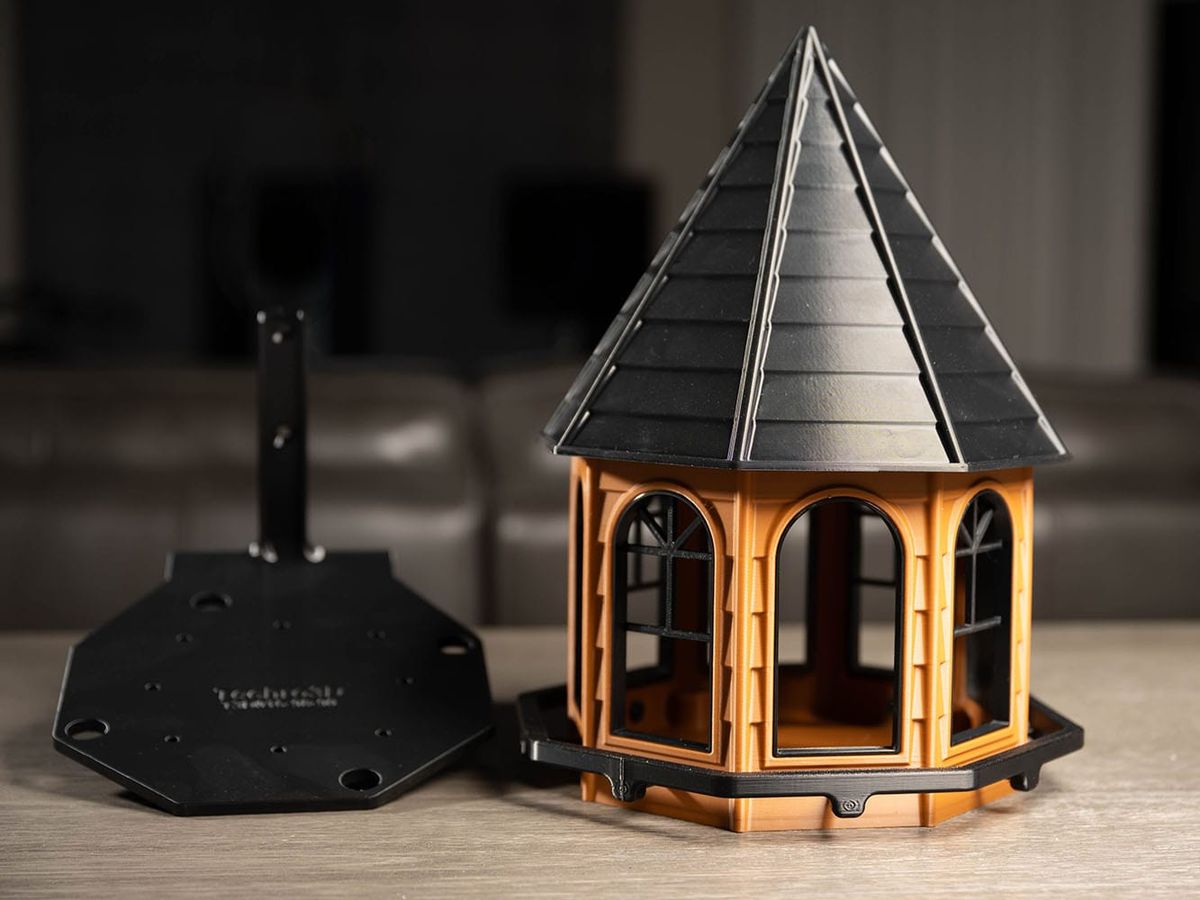
One of the larger prints I’ve done recently is a functional outdoor birdhouse. The full model would have taken close to 40 hours on a single printer, so instead I split the parts across four machines and ran them simultaneously. That cut the total production time dramatically and gave me a chance to use a few of my go-to PETG filaments.
Splitting the Job Across Four Printers
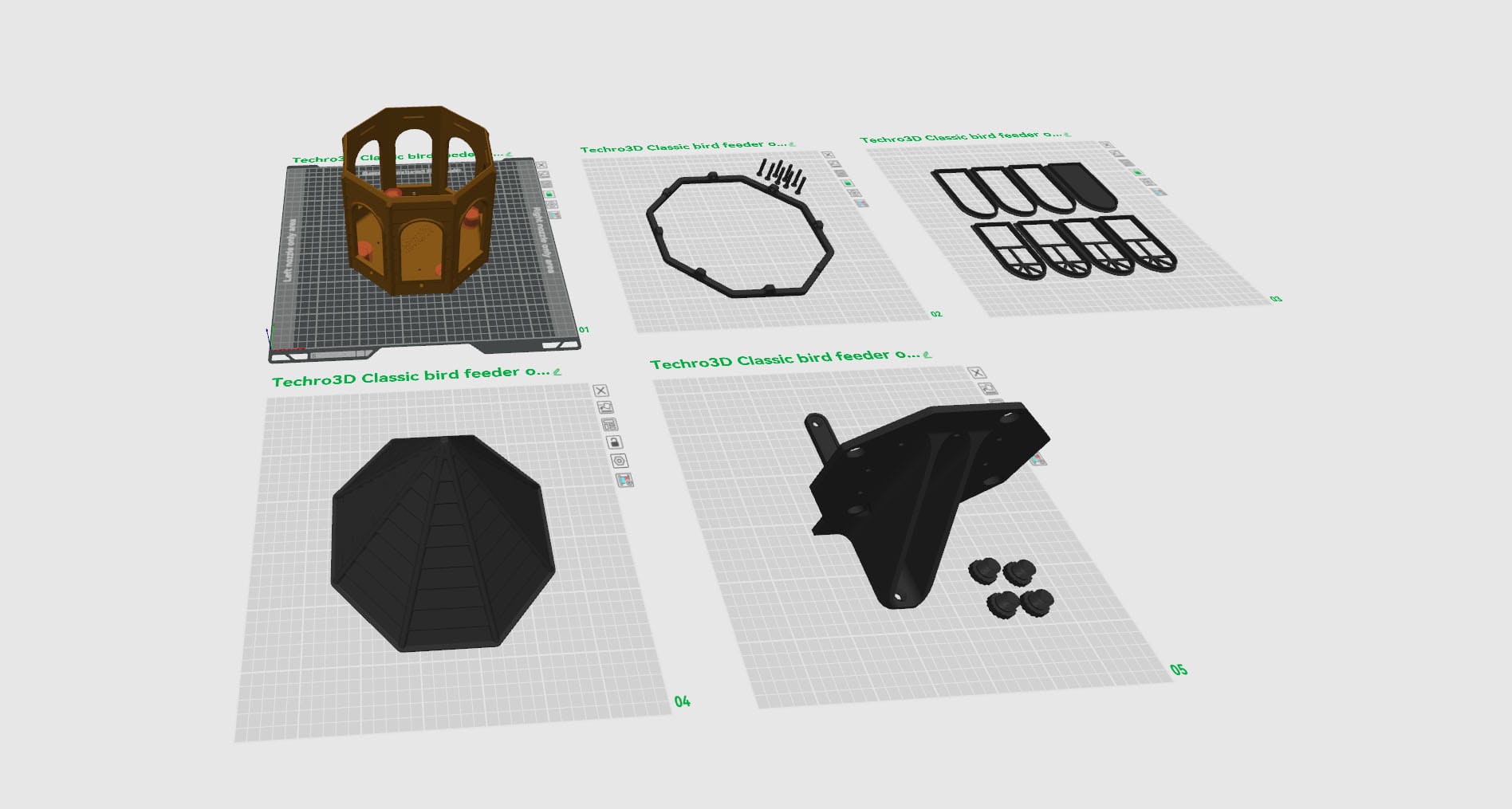
Breaking the model into major components made it easy to distribute the work:
- H2D — Structure (brown parts)
Printed with Bambu Lab PETG-HF. This is one of my favorite filaments because of the surface texture and consistency. It produces a clean finish and prints reliably. - P2S — Roof
Printed with eSun PETG-HS. I like HS for parts that need strength and weather resistance, and the roof is the part that will see the most exposure. - H2S — Base / Mount
Also printed with eSun PETG-HS for durability. The base supports the entire birdhouse, so using the stronger PETG made sense. - A1 — Perch Ring
Printed with Elegoo Rapid PETG. It’s a solid, easy-printing material that I often use as a backup when I’m not running PETG-HS.
Running all four printers at once turned what would have been a long single-machine print into a much faster project.
Filament Choices
Each material was chosen for a specific reason:
| Part | Printer | Filament | Notes |
|---|---|---|---|
| Structure | H2D | Bambu PETG-HF | Great texture and consistent prints |
| Roof | P2S | eSun PETG-HS | Strong and weather resistant |
| Base | H2S | eSun PETG-HS | Durable mounting platform |
| Perch | A1 | Elegoo Rapid PETG | Reliable backup material |
PETG is generally a good choice for outdoor prints. It holds up better than PLA in heat and sunlight, and it prints much easier than materials like ASA.
Outdoor Installation
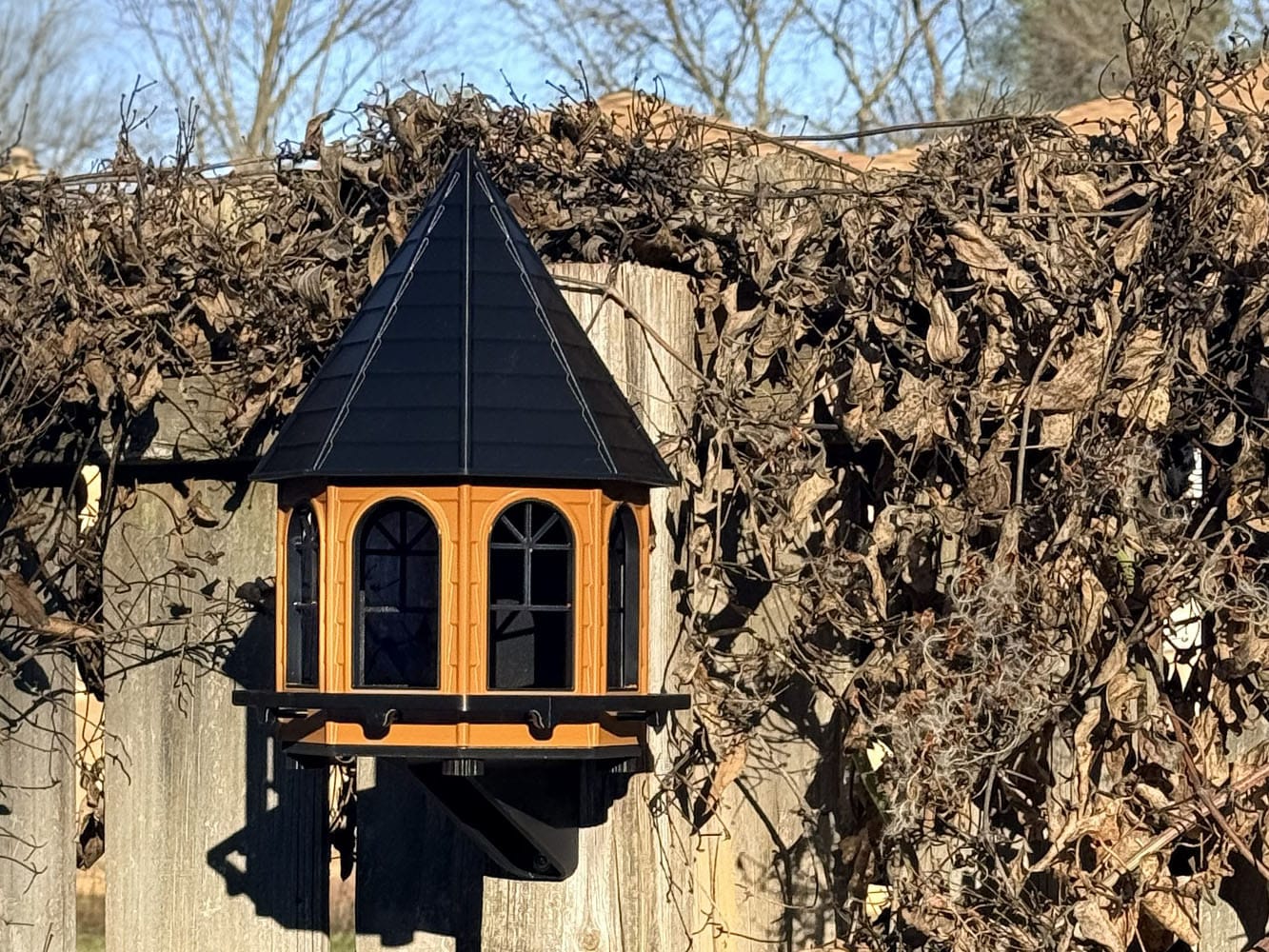
The finished birdhouse has now been installed outside where it receives roughly half sun and half shade during the day. PETG tends to handle outdoor conditions fairly well, especially compared to PLA, which can soften in heat. I’ll be keeping an eye on it over the coming months to see how the different materials hold up to weather exposure.
Final Thoughts
Splitting a large print across multiple printers is an easy way to reduce overall production time. What would have been roughly a 40-hour print on a single machine became a much faster project by distributing the parts across four printers.
This project also provided a good comparison of several PETG filaments that I frequently use. All three materials performed well, and the birdhouse should be a useful long-term test of how these materials handle outdoor conditions.