When PLA Is Enough—and When It Isn't

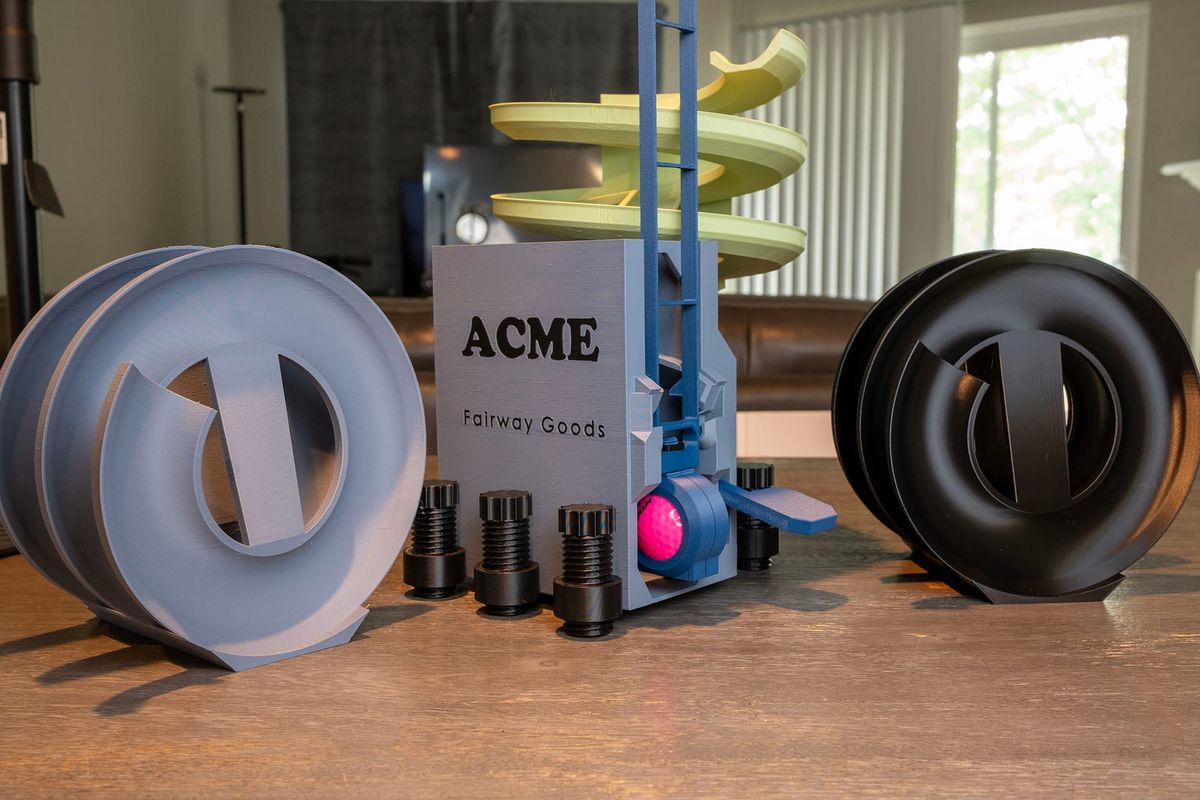
One of the things I enjoy most about 3D printing is that every project teaches you something. Sometimes the lesson comes from a successful print. Sometimes it comes from a failure.
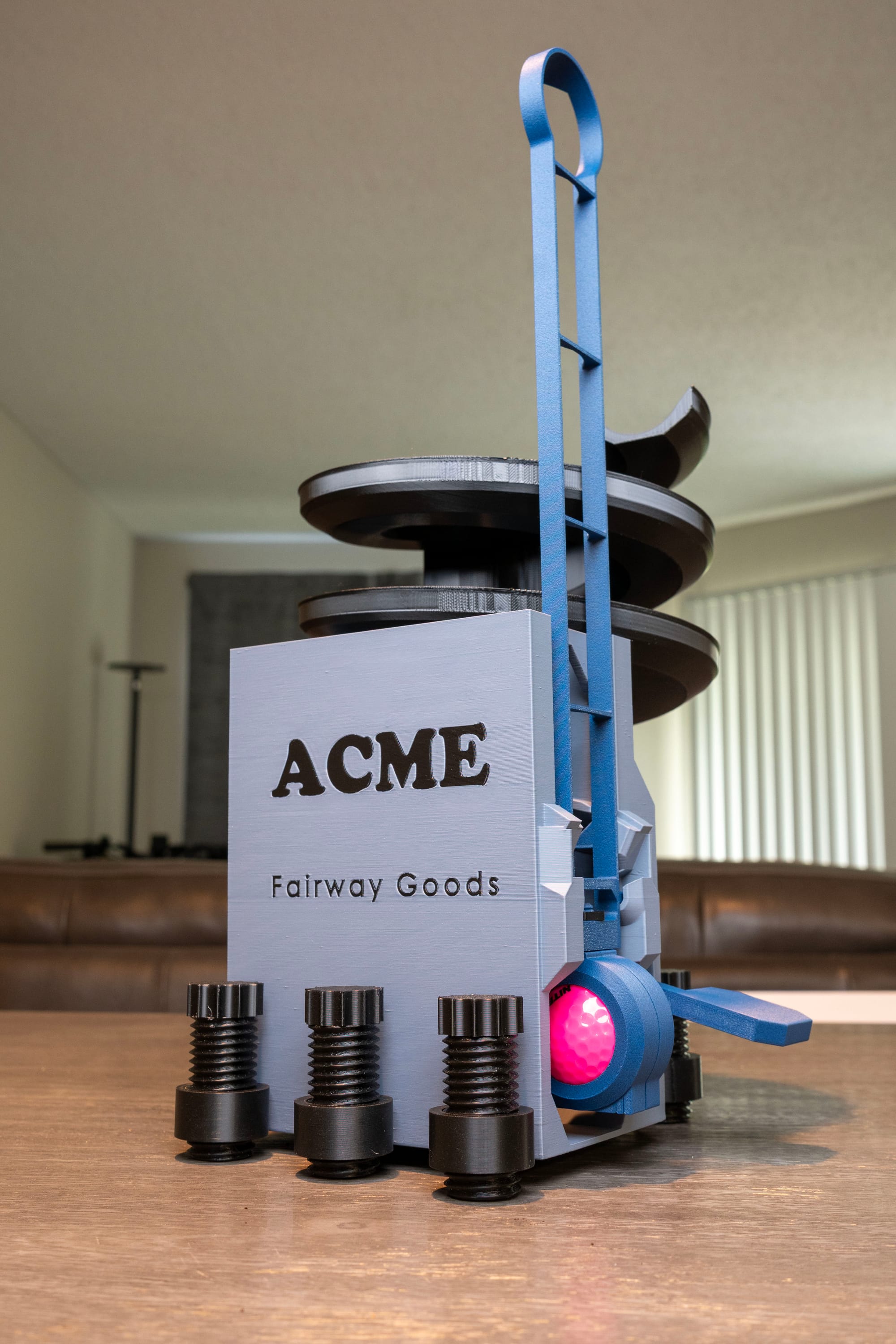
Recently, a golf ball dispenser project reminded me of an important lesson about material selection and the differences between PLA and PETG.
The original dispenser was printed primarily in PLA. Although PETG has become my go-to material for most functional prints, I still use PLA when it makes sense. It prints beautifully, is easy to work with, and remains one of the best values in 3D printing.
The problem didn't occur because the dispenser was abused or subjected to extreme testing. Instead, it experienced something many 3D printed projects eventually encounter: it was left in a hot vehicle.
Most people don't realize how quickly the interior of a parked car can heat up, especially during the summer months. While PLA is an excellent material for many applications, the temperatures reached inside a vehicle can be high enough to soften PLA and cause parts to deform.
That's exactly what happened with this dispenser.
Several of the critical components began to warp and lose their shape after being exposed to the heat. The experience served as a practical reminder that material selection matters, especially for items that may be stored in vehicles, garages, workshops, or other locations where temperatures can climb far beyond normal room temperature.
Rather than throw the dispenser away, I decided to use the opportunity as a learning experience.
After examining the failed parts, it became clear that not every component needed to be reprinted.
After examining the design, three components immediately stood out as candidates for a more heat-resistant material:
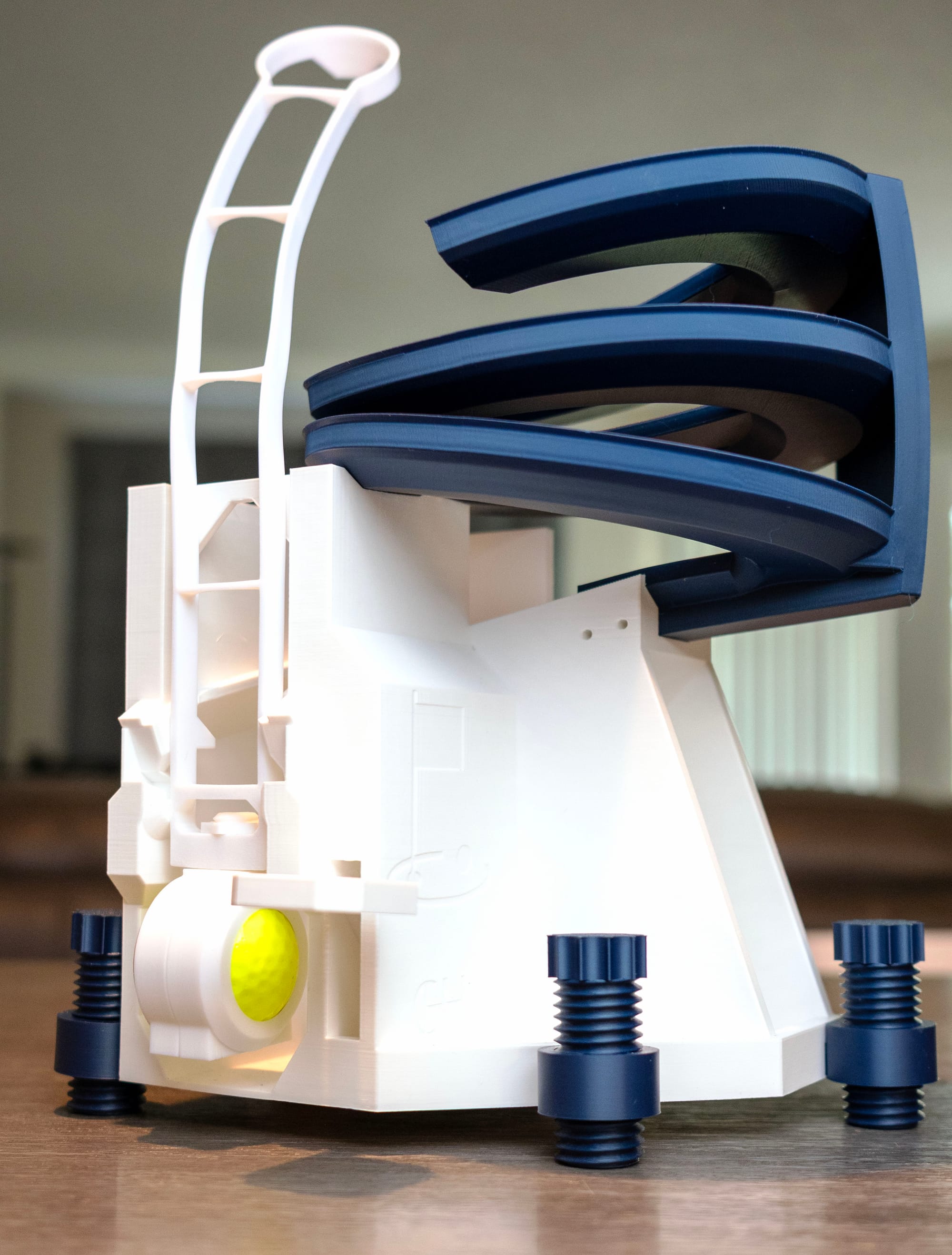
- The spiral ramp where the golf balls travel
- The swing arm that releases the golf balls
- The foot pedal that activates the mechanism
These parts experience the most heat exposure and mechanical stress and are critical to the operation of the dispenser.
Instead of reprinting the entire project, I replaced only the affected components using PETG. The result was a hybrid design that retained the original PLA structure while upgrading the most demanding parts to a material better suited for the application.
The repaired dispenser worked exceptionally well and, in many ways, became an improvement over the original version.
That experience also influenced the next generation of dispensers. Newer versions incorporate PETG and PETG-CF for the high-stress and heat-sensitive components from the beginning. Matte PETG has proven especially effective for the spiral ramp, providing excellent durability while producing a surface finish that closely resembles an injection-molded part.

Lessons Learned
My Material Choices for This Project
Main Tower & Decorative Parts
- Material: PLA
- Reason: Easy to print, excellent appearance, and sufficient durability for parts not exposed to significant heat or stress.
Spiral Ramp
- Material: PETG
- Reason: Better heat resistance and dimensional stability for a part that could be exposed to warm environments.
Swing Arm
- Material: PETG-CF
- Reason: Added stiffness and heat resistance for a functional moving component.
Foot Pedal
- Material: PETG-CF
- Reason: Improved durability for a frequently used, load-bearing part.
Key Takeaway: PLA remains an excellent material for many 3D printing projects, but parts that may be exposed to the heat of a parked vehicle, direct sunlight, or repeated mechanical stress are often better candidates for PETG or PETG-CF.
The takeaway from this project is not that PLA is a poor material. Quite the opposite. PLA remains one of my most frequently used filaments and is ideal for decorative parts, prototypes, and many indoor applications.
The real lesson is understanding where each material performs best. For components that may encounter heat, stress, repeated movement, or outdoor use, PETG often becomes the better choice.
This golf ball dispenser was a perfect reminder that sometimes the best solution is not choosing one material over another—it's using each material where it performs best.